(Monday, December 31st, 2007)
Here we are! Transport regulation authorities added the Lithium batteries to the list of banned objects in carry-on luggage in planes.
Of course, Lithium batteries can explode. But they took the additional step of prohibiting them when they are out of the device and contain more than 2g of Lithium…
Photographers leaving for a long trip: Put them in the checked luggage if you do not want to see them ending with fire-arms, knifes, cutters and mineral water bottles (in the junk bin).
Find more stories in Liberties, Photo safari, Security, Use your D-SLR
(Monday, December 31st, 2007)
I find that it is possible to improve yourself by looking at your own pictures like any outside critic would. For this, because it is often hard to make this schizophrenic move, I developped a number of questions I ask myself when I look at my own photos.
While some questions can (and should) be asked when shooting a picture, some others cannot be corrected at this late stage and must be asked just before pressing the shutter button on the camera:
- Am I close enough? Too many photos are hopelessly bad just because the photographer chose to include too many things and moving closer would have brought attention to the important items. Do not think that this can be corrected later (using Photoshop). It’s not only a matter of pixels, but a question of diving into the subject.
- Where is the light coming from? Photoshop will not help correct gross lighting errors like I do on a daily basis. We must check that the interesting parts of the model are correctly lit, that dark shadows are not cast without elegance, that hard light does not crush all details or force the model to blink. Often, it’s only a matter of waiting more a better light or moving around the model (moving the light or moving yourself).
- What about the background? So many photos are lost because of ugly backgrounds. Using the lens aperture of your bridge or SLR to either bring background in (closing the diaphragm - large aperture values) or to smooth it out (opening the diaphragm - small aperture values) is the thing to do.
What about the foreground? You’d think this is the opposite, but not completely. In some case, the foreground is bringing depth of perception to your photo. This is particularly true of landscapes. Nearly all great landscape photos (including panoramic ones) take into account the need to have elegant and complementary foreground elements. If you’re in landscapes, it’s probably the most important issue to keep in mind while shooting.
- Would a change of perspective improve the photo? Quite often, just moving around will make the photo different (and better). Move up or down. Move right or left. Move forward or backward. Your model will look different. For wildlife digital photographers, I would suggest to shoot one image from where you are, just before moving (most animals will not tell before leaving completely the scene; Be sure to have one medium-quality image before reaching for the day’s shot - I often take 10 or 20 progressively better images of the same animal model before complete satisfaction and I keep one of the last 2 or 3).
- Should I hold the camera differently? Don’t overdo it, but with the LiveView feature of this year SLR cameras and nearly every point’n-shot cameras, you can easily move your camera around (above the croud or under your knees). However, you should always ask yourself about turning your camera to get a portrait/vertical image rather than the usual landscape/horizontal format. This goes hand-in-hand with correct framing. And it could save a just decent image at sleection time on your PC.
- Where is the focus? What are the in-focus parts? out-of-focus parts? Choose wisely. For wild life and many model portrait photographers, the best is to put the eyes in full focus. For many landscape photographers, the focus should not be at the infinite end of the range, but a little in front taking advantage of a closed aperture to have a lot of crisp in as many parts as possible. At selection time (on the PC), I find that this is impossible to usefully correct, and this is the number one reason for dumping one of my shots (not crisp enough, out-of-focus, wrongly focused, etc.)
Are the colours right? As far as the forms of the subjects can go, the colours should be right: Either complementing themselves or strongly opposing themselves to help story-telling.
- Are the surfaces right? It may come from my black & white background, but even in colour photography you should always look at the surfaces. Their structure has a lot to offer: stripes, angles, dots, lines, etc. A wood plank will only be meaningful if its surface is rich in forms and lines, be it in B&W or in colour.
- What story is the photo telling? The people, the houses, the plants, the mountains in the photo must be building together a single coherent story that will pop to the eyes of the viewer. For wildlife photo, I often find that this question leads to waiting a couple of minutes before snapping the photo to allow another animal to move in or change its posture.
Where is the focal point? The eye will be attracted to strong/active locations in the image. Think about positionning interesting elements into one of the focal points according to “the rule of the thirds“. The eye will easily go from one focal point to the next and see (or not) the most striking elements of your photo.
- Is the framing strong enough? This is something that can often be improve at the last stage taking advantage of the plentifulpixels of today’s cameras. A little re-framing is often good to remove unwanted elements, to emphasize focal points, to make the model the real hero of the snapshot.
Later, when developing the picture (on your PC) or even when selecting what pictures to keep, you can ask the same questions. But it may be too late. I try to keep these in mind and I observed that it increased a lot the quality of my photos.
Find more stories in Photo, Photo & Graphics, Tech, Use your D-SLR
(Monday, December 31st, 2007)

Leucadia longwing (Heliconius Leucadia, H.W. Bates 1862)

Unidentified caterpillar
Click on the thumbnail images to enlarge them
Find more stories in Photo, Photo safari, Wildlife photo
(Monday, December 31st, 2007)
Find more stories in Photo, Uncategorized
(Sunday, December 30th, 2007)

Click on the thumbnail image to enlarge it
Don’t you wonder how the small bird did not fly away?
Find more stories in Photo, Photo safari, Wildlife photo
(Sunday, December 30th, 2007)
Thanks to all visitors! This year 2007 saw a near-doubling of the number of visits and the start of new article categories. Arguably, you were pleased, but we’ll try to make it even better. I start immediately.
Happy new year 2008.
Find more stories in Blog, Uncategorized
(Sunday, December 30th, 2007)


Click on the thumbnail images to enlarge them
Black-collared Hawk (Busarellus nigricollis, Buse à tête blanche).
Find more stories in Birds, Photo, Photo safari
(Sunday, December 30th, 2007)
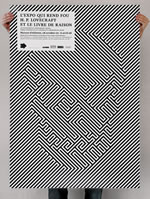
Find more stories in Art, Optical illusion
(Saturday, December 29th, 2007)

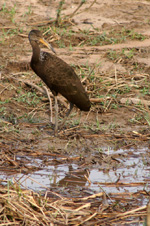
Click on the thumbnail image to enlarge it
Limpkin (Aramus guarauna, Courlan brun).
Shot in Brazil, October 2007.
Find more stories in Birds, Photo, Photo safari
(Saturday, December 29th, 2007)
We learned this week that Warner Music and AMazon are going to gang in in order to sell DRM-free MP3 files. This is the third music major to stop and listen to its customers who did not want to suffer the indignity and incovenience of this kind of digital rights protection.
EMI and Universal had already gone this way. The only big one missing is still Sony BMG (Do you remember? They were the authors of the famous rootkit installed on some of their CD to protect them and that breaking havoc on their customers’ PC machine).
Complementary information: With this annoncement, Amazon will reach nearly 3 million DRM-free MP3 files (up to now, the record was held by iTunes with -only- 2 millions).
Find more stories in Culture, DRM, Entertainment, Music, P2P, Security
(Saturday, December 29th, 2007)
This is the definitely interesting story from LifeHacker. It’s difficult and long but you can get Leopard running on a PC-made-a-Mac.
Source: Build a Hackintosh Mac for Under $800 [Hack Attack].
Find more stories in Apple, Computers, Tech
(Saturday, December 29th, 2007)
Do you remember my newsbit about LightZone for Linux? Unfortunately, you may also have noticed that some time later, LightCrafts had stopped distributing it.
However, after a petition on the forums, things changed again and version 3.3 beta of LightZone for Linux is again available for download.
It is still difficult to be sure if the final version 3.3 will be freely available, but I feel that it would still be a good way for LightCrafts to widen the paying distribution of this very good tool for digital photographers: LightZone.
Find more stories in Apple, Legal downloads, Linux, Photo, Use your D-SLR, Windows Vista