Colors in Shanghai
(Thursday, May 15th, 2008)
(Tuesday, May 6th, 2008)
As I am writing this article, I am in Shanghai for a profesionnal trip (my company seems to believe that I can improve some things in our manufacturing plant of Pudong, in the suburbs of this big Chinese city). As an amateur photographer, I took some time for myself to look at some photo opportunities here. Two remarks may interest you too.
The most obvious observation in this gigantic city of 17 million people is that the air is full of dust. And I mean it. Everybody notice it. The city is under permanent construction (or is it “re-construction”). Zillions of trucks are moving earth around to help build sky-scrappers all over the city. This and the overall industrial pollution makes it amazingly foggy.
I wanted to shoot a few photos; Don’t even think about deep landscapes (even from the highest buildings): On the clearest day, the sky is white and the visibility is limited to a distance surprising to even my pre-informed self.
However, Shanghai is one the modern world cities where night shots are a real pleasure. There is light and contrast everywhere: Buildings with lights from top to bottom, giant ads, displays of all kinds and all sizes, ligthed boats on the Huangpu river. So much light that you may even forget your tripod if your willing to shoot at high ISOs.
![]() |
![]() |
![]() |
![]() |
![]() |
|
Click on the thumbnails if you want to access the larger versions
OK! Shanghai is less attractive than Hong Kong, but China is usually a place where you can find photo bargains. In Shanghai, the place to go -apart from the usual electronics malls found all over the city, like in Pudong (South of Shiji Avenue)- is the big photo market at Luban Lu and Xietu Lu (in Chinese, “Lu” means “road”), that I found easly thanks to Internet (it is just North of Lupu bridge and Zhongshan N° 1 Rd, in Puxi).
![]() |
![]() |
Click on the thumbnails if you want to access the larger versions
You will find there anything for photo and photo activities. 6 floors of small shops. Of course, you will find camera sales on 1st floor (Canon, Sony, Nikon, Pentax, Sigma, etc.). But as in many Shanghai malls, the higher you climb, the better bagains you find (until you reach a level where most offers are presented in approximate stacks and packs).
Apparently, the risk of seeing fake products is limited, but it may be very difficult to find the difference between an original product and a fake one. However, I did not find any price obviously too-low-to-be-true (a sure mark of fake products), just a lot of good bargains and some less impressive prices. Apparently, prices are a little better than most Europeans prices (even taking into account an added VAT to be paid when returning home) with nothing Earth shattering. However, you must remember that haggling is standard practice here. Some advice:
People are very welcoming and even customers proposed to assist me and shopkeepers not speaking English. Many people where genuinely interested in knowing where I came from, what I wanted to find, etc.
Speaking of bargains, I saw a few things that could interest Minolta and Sony DSLR lovers like me: The last 3 floors host a large number of second-hand shops of relatively good quality. Plenty of equipment from all the brands you could expect and a few more… Examples of Minolta second hand lenses:
So, you can dig and find a few good things. Or you can run for the shops specializing in lighting equipment (fourth floor). Or you can look for the designer’s Leica shop on the last floor. Or you can shop around for a half-priced tripod (all brands are available plus a few good local copies).
Shanghai is a neat place to be if you love big cities and skyscrappers. Tourism is quite pleasant there and hundreds of thousands of expatriates (and more tourists from all over the world) have made the local people really welcoming.
![]() |
Click on the thumbnails if you want to access the larger versions
(Wednesday, April 30th, 2008)
You may think that I am partial presenting you this portfolio today. Yes! Anne Roumazeilles is my nephew. But I really love what she does while she only began shooting photos a short time ago.
I let you judge these images taken in Île de Ré (on the Atlantic coast of France) and feel free to leave a comment (or constructive criticism).
![]() |
![]() |
![]() |
|
![]() |
![]() |
| Click on the thumbnail images to enlarge them | |
Copyright (C) 2007-08 Anne Roumazeilles - All rights reserved.
For Jacques.
(Monday, April 21st, 2008)
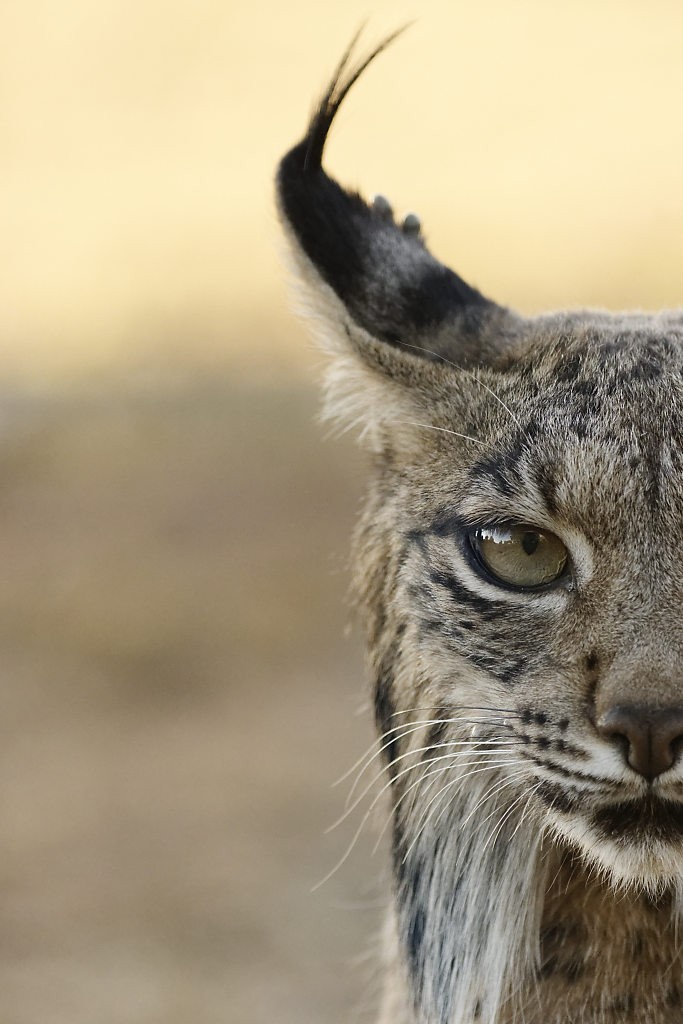
A few top-quality images taken by James Pan. Felines, lovely big cats and other animals shot in perfect portraits.

(Sunday, April 20th, 2008)
Some abstract images of sand. Shot in Lagoa do Peixe (Rio Grande do Sul, Brazil) in 2008. To me, they looked a little like some satellite photos of the planet Mars.
|
|
|
|
|
|
|
|
|
Click on the thumbnails if you want to access the 1280*1024 versions
Those photos can be used freely for your own wallpaper (on your own computer).
(Tuesday, April 8th, 2008)
See them all at http://www.naturesbestphotography.com/

(Friday, March 28th, 2008)
The most powerful super-computer in Europe (and the 13th in the World), MareNostrum, is located in Barcelona, Spain, and has been installed in an old chapel. This gives us the most beautiful supercomputer in the world (this is nearly computer soft-pron photo).

Photos by Simon Norfolk and Ronald Halbe. Barcelona, Centro Nacional de Supercomputación.
(Tuesday, March 11th, 2008)
Fabrice is a friend currently living in Japan. I already had presented some of his photos. Here is one more that I find particularly nice:

Fabrice Hénon web site.
In order to have a wider view of his photo work.
(Sunday, February 24th, 2008)
HDR photography (High Dynamic Range Photo) is a process where you take several photo pictures with very different exposures (different speeds or different apertures) and then use a software to pack them into one image packing the whole range of light. The result is often a little erie but allows to take images impossible to catch in any other circumstance.
Good examples come from the Japan HDR group on Flickr, like the following.
But if you want to test your capacity at this, I suggest you dig into the following links:
Whatever your software package, you should find something to use.
(Saturday, February 23rd, 2008)
If like me your a photographer who wouldn’t dare making a video, you still can think about doing a decent time-lapse sequence out of your photographs. However, this cannot happen just by taking images and loading them into a software.
You must start by studying the lessons from PhotoJojo.com’s Ultimate Guide to Time-Lapse Photography.
When you think that you’ve mastered the technique, you can think again and look at the following example created by Lucas Oleniuk, photographer of the Toronto Star. Taking 20,000 of his still photographs, he built a 20-days sequence re-hashing the issue of global warming for us.

(Friday, January 18th, 2008)

Source: 11 phenomenal images of earth.
Copyright (C) 1999-2008 - Yves Roumazeilles (all rights reserved)
Latest update: 28-apr-08