Roumazeilles.net

Archive for the 'Leopard' category


Nepal with Amawanda – Nepalese dragonfly

(Monday, November 9th, 2009)

hauthp_03

Back from a few days of photo trip to Nepal, I feel it is time to share with you some of this astonishing experience organized by Amawanda and guided by Alain Pons.

I am more or less a wildlife photographer attracted to the African wide-open spaces. But I had been attracted mostly by the presence of a seasoned pro photographer (Alain Pons) assisted by a very serious organization (I had been able to appreciate them in a previous trip to Kenya in 2008). I had also noticed that costs were relatively moderate (taking into account that this is a wildlife trip – which is often very expensive) including -we could check this later on location- a significant share reserved for local actions for development and nature protection in full coordination with the local structures and the local wildlife organizations.

A summary of the program:

  • 1 night in Kathmandu in 3*** hotel
  • 2 nights in Pokhara in 3*** hotel
  • 1 night in LumbinÄ« in 2** hotel
  • 6 nights in Bardia in 3*** hotel
  • 1 night in Kathmandu in 3*** hotel

The flight to Kathmandu was without surprise on Qatar, despite the long night stop in Doha airport where the only Duty Free shop cannot be considered as a commendable tourist spot (but they have a nice stock of alcohol or cigarettes for those who prefer to prepare themselves for later needs).

The Kathmandu-Bardia journey requires about 20 hours of bus or car. The stops provided in the program are a good way to break the inevitable monotony. A faster plane journey would be possible (it is included on the way back) but it would be a pity to avoid the view in the valleys and from the mountain roads out of Pokhara.

All along this journey, I will try to make a few recommendations about what a photographer might find more interesting to stop for.

(more…)

Leopard, food storage in a tree

(Monday, November 3rd, 2008)

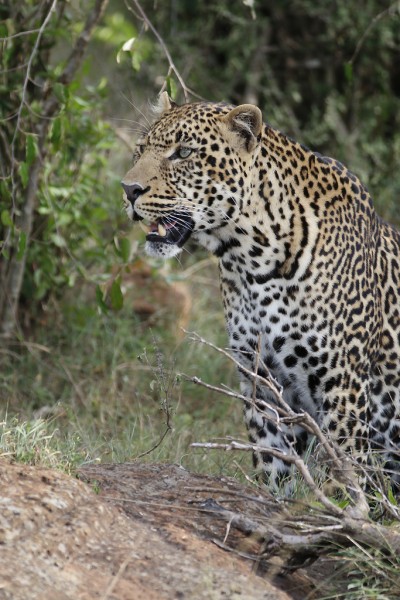
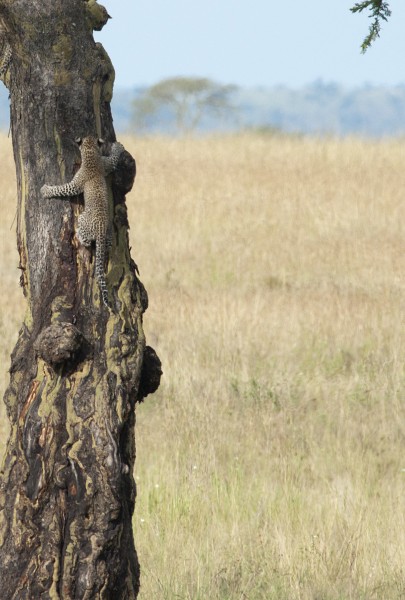
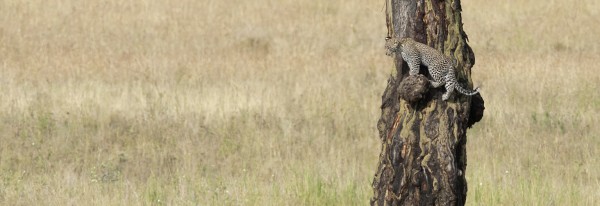
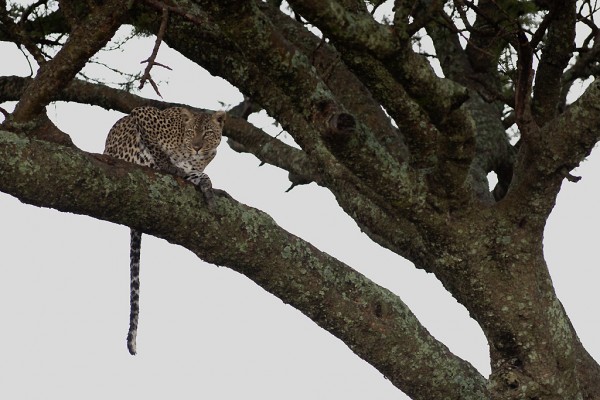
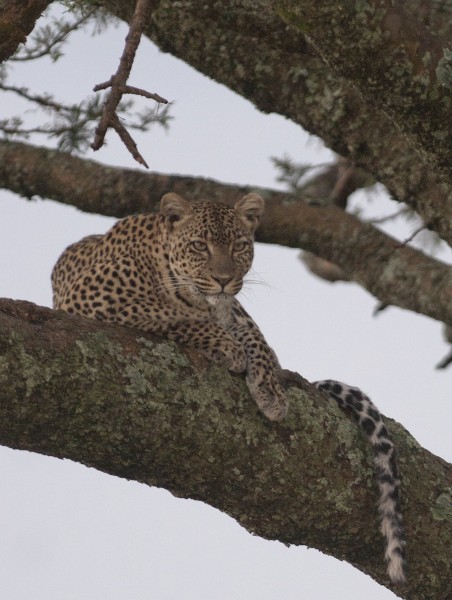
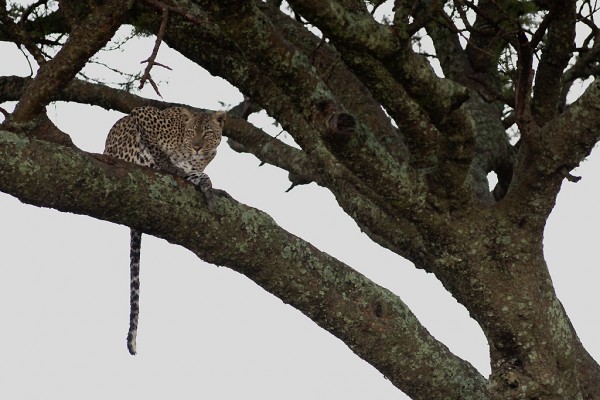
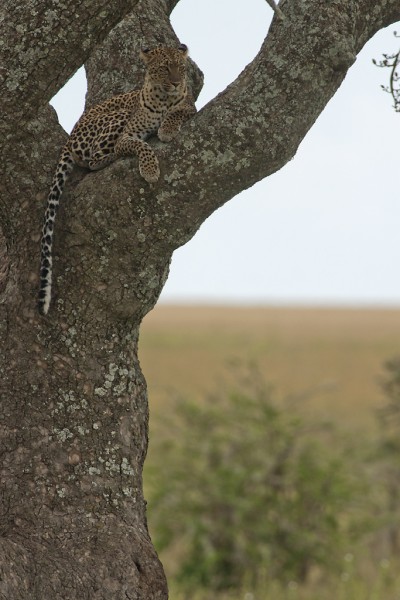
Leopard is a big cat special because it protects its largest preys (those which will make more than a single lunch) by dragging them away and up into a tree. It can take its own weight (or a little more) up to a high branch where no hyena would be able to steal it.

It takes the carcass, usually by the collar.

Leopard - Copyright (C) 2008 Yves Roumazeilles

Leopard - Copyright (C) 2008 Yves Roumazeilles

Then, it will choose the right branch, look and find the right climbing path.

Leopard in front of the tree - Copyright (C) 2008 Yves Roumazeilles

Leopard in front of the tree - Copyright (C) 2008 Yves Roumazeilles

Unfortunately, this one did not succeed in dragging up the Bohor Reedbuck it had caught late in the afternoon. It’s only during the night that (after reducing the weight by eating more of it) that the leopard brought the prey in its tree. Before light out, it just “visited” the tree.


Leopard in a tree - Copyright (C) 2008 Yves Roumazeilles

Leopard in a tree - Copyright (C) 2008 Yves Roumazeilles

Leopard in a tree - Copyright (C) 2008 Yves Roumazeilles

Leopard in a tree - Copyright (C) 2008 Yves Roumazeilles

Click on the thumbnails to enlarge them

Leopard (Panthera pardus, Léopard, Leopardo), Masai Mara, Kenya, September 2008.

Big cats images on my new web site

(Friday, October 24th, 2008)

If you are interested, you can find some of my images about big cats (lions, leopards, cheetahs) on my new web site YLoveBigCats.com. As you certainly have noticed, some of these images come from my recent trip to Kenya (Masai Mara).

Lionness, Kenya (Copyright 2008 Yves Roumazeilles)

Lionness, Kenya (Copyright 2008 Yves Roumazeilles)

Back from Masai Mara

(Wednesday, October 1st, 2008)

After about 10 days out of France, I am back from the Masai Mara National Reserve (in Kenya). I brought back about 30 GB of wildlife photos (around 1700-1800 images) to be sorted out in the coming days. You can expect series of published images here on a regular basis.

Kenya in photo safari

(Monday, September 22nd, 2008)

You will probably notice a little slow down in publication of posts here in the coming days: I am travelling for a few days to Kenya in order to shoot photos in the Masai Mara National Park during the great migration of herbivores (wildebeests and zebras, mostly).

I will be there with Alain Pons, wildlife photographer, and supported by Amawanda travel agent.

Images later here.

Buy my photos

(Friday, June 6th, 2008)

You can now start buying some of my photos at RedBubble. I sent them a few original artworks and it gives you access to some products like:

  • Cards,
  • Matted Prints,
  • Laminated Prints,
  • Mounted Prints,
  • Canvas Prints,
  • Framed Prints

Buy my photos at RedBubble
Buy my art

Défi pour la Terre

(Thursday, May 22nd, 2008)

Défi pour la Terre (by CLM BBDO)

A campaign to protect Earth and save energy by CLM BBDO.

Jaws, on firm ground

(Sunday, April 20th, 2008)

Feline teeth are their most prominent exterior feature. Since the prehistoric Smilodon (the smiling feline) and its gigantic canines, big cats use their impressive dental characteristics to hunt.

Smilodon - Teeth

On the Laelaps web site, you will find a detaileld article on feline teeth, from yesterday to nowadays: What big teeth you have. Please, also notice the hunting videos (lions hunting elephant, lions hunting a giraffe).

Cheetahs, pumas and jaguars of Europe

(Wednesday, April 16th, 2008)

Found on Tretrapod Zoology, a series of articles about prehistoric felines among which one can find big cats like lions, pumas, jaguars, cougars, cheetahs or leopards on continents where they totally disappeared later.

Viretailurus

Kenya safari video

(Tuesday, April 1st, 2008)

Source: http://www.coreybehnke.com/.

Amur Leopard Cub

(Monday, March 3rd, 2008)

The Marwell Zoo in Hampshire (United Kingdom) is proud to be the location of birth for a marvelously nice kitten: 14 weeks, already some impressive teeth and not yet a name.

Amur Leopard Kitten

It was just a few days ago that the small big cat has been autorized to go out (under the attention of its mother Asha) and to be seen by the public.

The event was even more significant because this is probably the feline whose disparition is the nearest. Originating in Eastern Siberia (near the Korean border), the species seems to only have 35 females left (and a few more males) and that will certainly not be enough to ensure the survival of the species in the wild.

Source: Daily Mail.

Masai Mara Safari Camp

(Sunday, January 6th, 2008)

Baby snow leopards

(Monday, October 29th, 2007)

Born in the Berlin zoo.

Baby snow leopard
Markus Schreiber

Ashera, a domestic cat with leopard blood

(Wednesday, October 24th, 2007)

We know that all cats (wild or tame) come from the same ancestor. You may not know that they can cross-breed more or less easily. This led LifestylePets to create Ashera a new kind of cat that is the result of cross-breeding Asian Leopard, African Serval and domestic cat.

Ashera

Unfortunately, you will have to give them $20,000 to get one. About 20,000 times more than attracting a cat wandering in the neighborhood with a cup of fresh milk.

The future will tell us if this helps in saving some felines from extinction.

Madness with big cats

(Thursday, June 7th, 2007)

Neatorama had a mad streak of posting with all these images and videos about big felines in weird contexts. It’s no longer wildlife, but it’s zazzy enough to show.

In this order, you will find below:

(more…)

Leopards in South Africa

(Thursday, May 3rd, 2007)

After presenting you images of many wild animals, here come those we were specially coming to meet in South Africa: Leopards.


Young male Leopard in a tree
He was eating an impala up there


Young male Leopard in a tree
His name is Matimba and he still hunts with Safari, his mother


Lying leopard, yawning
Impressive display of teethes
[Specially for Yves, the dentist]


Lying leopard, yawning
Photo without due respect to the power of the predator…


Portrait of a leopard

Female leopard in a tree
What else is to do when…
the model has a bad/ugly/wounded eye,
the model does not want to stay in a good light,
you have no time to move?

(Click on the thumbnails to see the larger image)

Dumb hunters kill one out of seven last females of Amur Leopards

(Thursday, April 26th, 2007)

The WWF announced that hunters in Eastern Russia recently killed one female of the critically endangered species of Amur Leopard. The animal was shot and them beaten to death with one blunt object apparently. She was one of the last seven (7) female animals still living of that species. The end is approaching fast for them.

Sources: the Register, New Scientist, Futura-Sciences & AFP.


http://www.roumazeilles.net/

Copyright (c) 1999-2009 - Yves Roumazeilles (all rights reserved)

Latest update: 8-sep-09

Search provided by Google.com
Roumazeilles.net
Roumazeilles.net