Roumazeilles.net

Archive for the 'Nature and global warming' category


Landscape photograph lesson in Zion National Park

(Sunday, August 31st, 2008)

Autumn in the Utah, Zion National Park: A great location for photo and landscape photo lessons from Brett Higgins.


Video link

Cute, but risky

(Friday, July 25th, 2008)

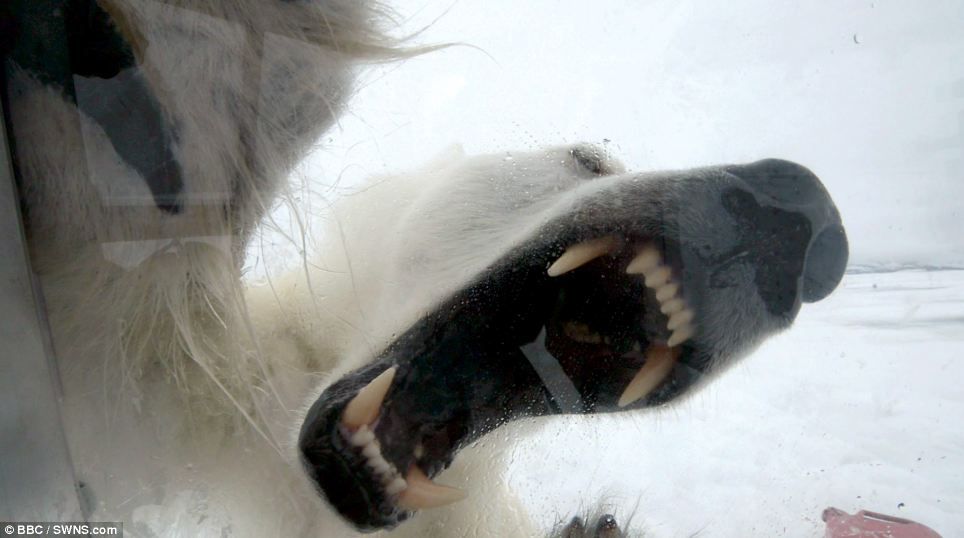
The kiss of the bear

Unknown author.

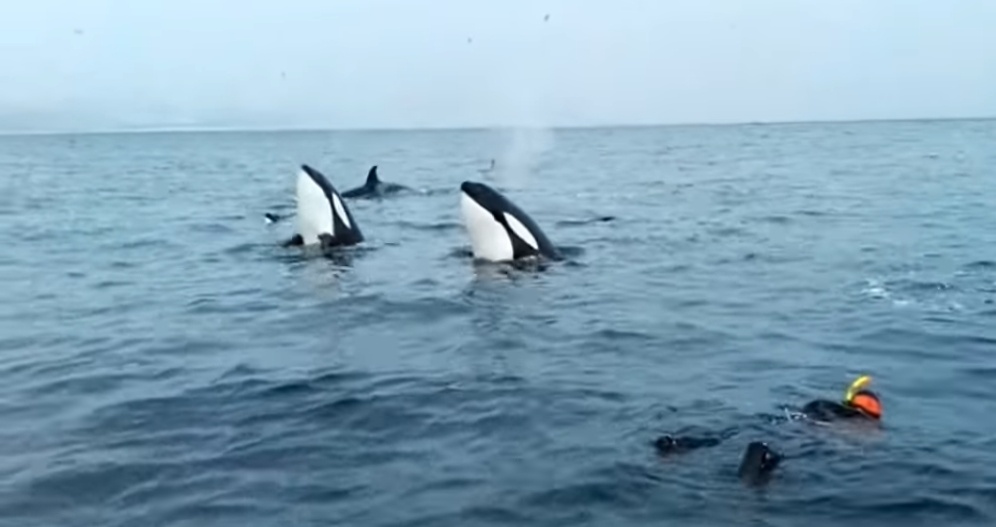
Sudden drop of minke whale populations

(Thursday, July 24th, 2008)

A scientific study coming from Iceland suggest that in the recent years the minke whale population suddenly dropped from 45000 in 2001 to less than 15000 last year. This is a enormous change that is not yet explained for a small whale that was more or less protected by its smaller size (big whales bring bigger profits).

Source: Science Blogs.

Sharks facing extinction

(Saturday, June 28th, 2008)

In the spotlight:

It is often believed that wide-ranging oceanic sharks are so fast and powerful that they are quite resilient when it comes to fishing pressure. Actually, this is quite the contrary. Most sharks are carnivorous and thus rely on the availability of a lot of animal food, they also tend to mature slowly (so all early catches tend to reduce the possibility of reproduction), they usually have a small number of offsprings.

However, this is not taken into account in fishing practices. Probably under the pressure of Asian countries booming markets and culture-related food habits (like the “shark fin soup”), sharks and rays are fished extensively out of any quotas or limitations. Nevertheless, their populations are depleting quickly. An international study, organised by the IUCN Shark Specialist Group (SSG), shows that within the 21 species studied, the extinction rate “is ten to a hundred times greater than historic extinction rates“.

They also make sound proposals for how to manage the situation (like “establishing and enforcing science-based catch limits for sharks and rays” or “ensuring an end to shark finning (removing fins and discarding bodies at sea)“).

Source: IUCN Shark Specialist GrouP.

Near the end of whaling?

(Sunday, June 15th, 2008)

This is the question or the hope that we can have after the opening of a legal investigation in Japan. A public prosecutor announced on last 19th of May that he decided to explore the observed operations of sale of whale meat to restaurants.

Greenpeace actively participates and there are many people hoping this to be the first step toward a true prohibition of Japanese whaling (even for scientific” reasons).

Source: NewScientist.

Japan: Whaling for research purposes

(Thursday, June 12th, 2008)

Japanese whale menu

Jaguar Research Center

(Friday, June 6th, 2008)

JaguarI recently noticed (in the ads appearing in my web site; some are quite good) the web site of the Jaguar Research Center. I went in October 2007 to Brazil, in Pantanal, at the heart of the Jaguar Research Center. So, I wanted to give a small feedback about this experience.

This is certainly the location where it is easier to find jaguars, these large felines from South America. If you want to see these very discreet animals, you’d better contact the Jaguar Research Center or one of the travel agents that can send you there (like Objectif Nature, my preferred French travel agent for photo-nature trips).

I have to admit that the jaguar being very shy and despite the high concentration of these big cats in Pantanal, it is somewhat difficult to find them: In October 2007, our photo group did not see it once in three days (even if the trackers and a boat of the supporting organisation saw it nearly every day).

All in all, it’s not so desperate even for a photographer like me who was really willing to catch a few fur spots on the digital sensor of my camera. Along with the flagship feline of the South American continent, this zone is a marvellous water paradise, with the Cuiaba, wide Brazilian river, and many calm locations to observe birds and other animals.

So, I heartily recommend the Jaguar Research Center and I will probably return to JRC -with the hope of finally meeting some free jaguars. And their web site is very nice.

Défi pour la Terre

(Thursday, May 22nd, 2008)

Défi pour la Terre (by CLM BBDO)

A campaign to protect Earth and save energy by CLM BBDO.

Big cat photos (James Pan)

(Monday, April 21st, 2008)

A few top-quality images taken by James Pan. Felines, lovely big cats and other animals shot in perfect portraits.

James Pan - All rights reserved

(more…)

Jaws, on firm ground

(Sunday, April 20th, 2008)

Feline teeth are their most prominent exterior feature. Since the prehistoric Smilodon (the smiling feline) and its gigantic canines, big cats use their impressive dental characteristics to hunt.

Smilodon - Teeth

On the Laelaps web site, you will find a detaileld article on feline teeth, from yesterday to nowadays: What big teeth you have. Please, also notice the hunting videos (lions hunting elephant, lions hunting a giraffe).

Big cats roam free in UK (Really!)

(Friday, April 18th, 2008)

Great Britain does not look like the place to look for big cats, but there are some large felines clearly not indigenous roaming freely in the United Kingdom. It is such a big thing that there is an investigative group collecting evidence about them: panthers, lions, cheetahs in the cold weather of England or Scotland.

Big cats in Britain
Big cats in Britain

Cheetahs and elephants roaming free in USA

(Thursday, April 17th, 2008)

LionsYesterday, we were speaking here about prehistoric big cats in places where they disappeared (e.g. Europe). Today, I want to point at a surprising proposal made by Josh Donlan.

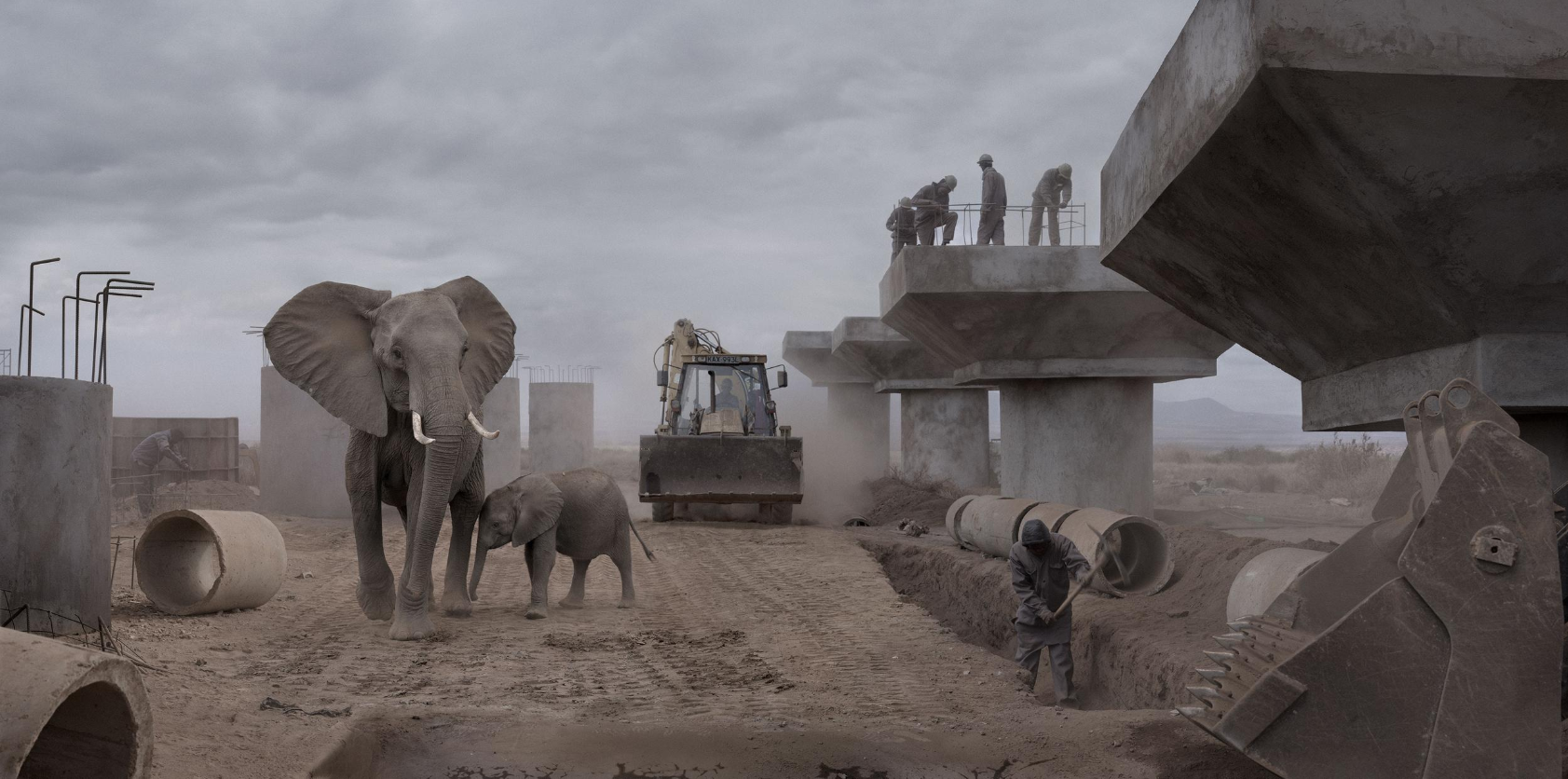
Recognizing that many big cats were roaming in North America tens of thousands of years ago, he want to re-introduce lions, cheetahs, elephants and other large animals in North America. He admits that this could be a bit difficult and that there is no way to rebuild the original population. But he offers ideas about how to bring camels and lions (from the closest relatives species) to a country were they were last seen hundreds of centuries ago.

Of course, it sounds a lot like Jurassic Park for real. Are you ready to find in the United States cheetahs hunting pronghorn bucks in the Wild West (wild again) or in Montana?


http://www.roumazeilles.net/

Copyright (C) 1999-2008 - Yves Roumazeilles (all rights reserved)

Latest update: 23-aug-08

Google.com
Roumazeilles.net
Roumazeilles.net