Roumazeilles.net

Archive for January, 2008


Sony & Sigma on long tele zooms

(Thursday, January 31st, 2008)

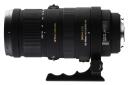
Today’s launches in Las Vegas have the advantage of offering good opportunities to make interesting comparisons. First comes to my mind the opposition of two high-end tele-zooms that should interest the enthusiast photographer looking toward sports, wildlife and even portrait:

Sigma APO 120-400mm f/4.5-5.6 DG OS HSM

  • Sigma APO 120-400mm f/4.5-5.6 DG OS HSM
  • Sony 70-300mm f/4.5-5.6 G (SAL70300G)

Tous les deux visent la meilleure qualité possible pour une gamme d’application très large. Ils viennent en concurrence directe avec les offres équivalentes de Canon (EF 100-400mm f4.5-5.6L IS USM) et Nikon (F VR Zoom-NIKKOR 80-400mm f/4.5-5.6D ED), par exemple. Tous sont des zooms ouvrant jusqu’à f/5.6 (pour maintenir un excellent couplage avec l’autofocus), tous sont stabilisés (Sony utilise la stabilisation au boitier, bien sûr), tous couvrent le champ complet d’un 35mm (APS-C ou Full Frame acceptés), les prix tournent autour de 1000€.

But, where I see Sigma rushing in the fight (probably trying to limit costs by cutting short the low-end of the range -where portrait photographers may suffer), I do not understand Sony’s choice of limiting itself to 300mm (only portrait will be satisfying). Portrait would be better served by a shorter zoom (bringing better aperture). Or by a prime lens of superlative quality as Sony (ex-Minolta) or Zeiss has the knowledge for.

We’ll have to see the exact characteristics and the image quality (the products on the market are among the best lenses possible in this category).

Sony Alpha 900: Sony confirms (most of) it

(Thursday, January 31st, 2008)

In today’s press conference in Las Vegas, Sony confirmed nearly everything we were saying here yesterday: The Flagship model will be coming in 2008. It will have a Full Frame sensor of 24.6MP (I was off by 0.2MP only). It will be stabilized by Super Steady Shot (the in-body Sony image stabilization). But once again, we did not get the official name. I’ll keep thinking that it will be Sony Alpha 900.

Snail kite, male

(Thursday, January 31st, 2008)

Snail kite
Click on the thumbnail image to enlarge it

Snail kite (Rostrhamus sociabilis, Milan des marais). Brazil, 2007.

Sony Alpha 900: 24.8 mega-pixels in Full Frame in 2008

(Wednesday, January 30th, 2008)

Ok! Sony did not disclose this in so many words yet, but it’s become quite clear. Let’s review the facts and the rumours:

  • Fact: Last year, Sony showed a mockup of a future Digital SLR camera tagged as “flagship”. Rumour: The enormous size of the pentaprism of the viewfinder shown lets people wonder whether Sony will make it a camera with a big Full Frame (after Canon and then Nikon).
  • Rumour: The high-end “flagship” camera should be named Sony Alpha 900 to keep the naming conventions of the pro-line of late Minolta brand.
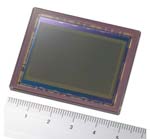
  • Fact: Sony announces today that they have developped a Full-Frame sensor of 24.81MP resolution with a set of very good features for superlative image quality. The chip will be shipping in industrial quantities before the end of 2008.

Sony Full Frame 24 mega-pixel sensor

Nouveau Sony Alpha à la PMAThe logical conclusion: Sony will use this new sensor in its flagship camera. It will be named Alpha 900. It will have 24,9 mega-pixel resolution, continuous shooting at 6 or 6.3 frames per second, 12 bit pixel management, optional capture of a window leading to lower resolution upon request (maybe with even faster continuous shooting). The Sony Alpha 900 will be available in 2008 (using the full production of the sensor).

The only thing that seems less certain seems to be the name, because this one relies only on hearsay.

Sources for the sensor specification: PhotographyBlog, DPreview.

Grey illusion

(Wednesday, January 30th, 2008)

Optical illusion

The central bar is actually fully homogeneous despite the feeling we have that its a gradient (due to the inverse gradient of the background; Hide it and you will see!).

3 days of Société Générale

(Wednesday, January 30th, 2008)

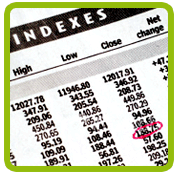
IndexesAs a complement of my previous post about the Stock markets Krach and Société Générale (“Société Générale nearly crashed the world Stock Exchange“), I wanted to provide the exact figures about the very heavy operations forced by the French bank onto the markets (closing the outstanding contracts) during the first 3 days days of last week. These activities furiously pushed the European markets down. When you look at the figures, you understand the impact they had.


Contracts sold by
Société Générale
Total volume of
EuroStoxx 50, DAX,
FTSE 100 futures
Ratio to
total volume
21 Jan 317,600 4,135,100 7.6%
22 Jan 337,000 5,227,000 6.4%
23 Jan 237,100 4,271,600 5.5%

Of course, when a single operator must sell -with no price limit- more than 5% of the total market volume, you can easily imagine that panic spread quite quickly.

Source: International Herald Tribune.

Sony Alpha 100: New firmware

(Wednesday, January 30th, 2008)

Check it: The firmware went to version 1.04.

http://support.d-imaging.sony.co.jp/download/DSLR/DSCA100V104E.zip

Deers from Pantanal, Brazil

(Tuesday, January 29th, 2008)

Red brocket deer
Red brocket deer (Mazama americana, daguet rouge)

Marsh deer
Marsh deer (Blastocerus dichotomus, Cerf des marais)

Click on the thumbnails image to enlarge them

Brazil, 2007.

Sony Alpha 300, Sony Alpha 350 – mid-range cameras

(Tuesday, January 29th, 2008)

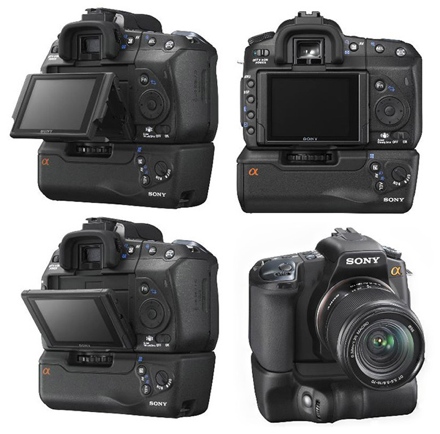
Nearly incredible, Sony let the cat out with information scooped on their Sony Style web site: New mid-range digital single lens reflex cameras. Not one, but two of them! One Alpha 300 with 10 mega-pixels and one Alpha 350 with 14.2 mega-pixels.

Beware, they will be quite easy to recognize because they bring LiveView (no need for the viewfinder, like on most compact point-n-shoot cameras) and a widely-orientable LCD screen.

See the images published here a few days ago.

Sony Alpha 300

After the shock of finding this rear screen there is another surprise. The race for more pixels has not ended for entry-level and medium-range cameras, even if the more expensive cameras for the enthusiasts and pros are more moderate and target more quality instead of more pixels (like the Sony Alpha 700).

Nikon D60, small, light and super low cost

(Tuesday, January 29th, 2008)

Nikon D60Nikon needed some freshening up of its entry-level digital SLR. so, with the opening of Las Vegas PMA, we discover the newest Nikon D60.

  • 10.2 MP sensor, with integrated dust reduction: Relatively small compared to the current 12MP cheap D-SLRs of the competition. But that’s not much of a difference in lines or columns of pixels.
  • 100-1600 ISO. Nothing impressive, let’s see the image quality.
  • 3-zone autofocus: Limited, but adequate if Nikon kept the quality and sensitivity of most of its products.
  • Continuous shooting at 3fps: Quite adequate for entry level.
  • 2.5″ LCD screen: why not 3″ like all of the recent cameras?
  • Plenty of little interface tricks (several presentation modes, auto-detect of camera orientation, eye-detect to switch off the LCD when using the viewfinder, in-camera editing features without a PC).
  • SD/SDHC flash memory cards.
  • Suggested retail price for the D60 Kit with AF-S DX Nikkor 18-55mm f/3.5-5.6G VR: 699€. Shooting right where the market needs it.

If you look at these characteristics, the camera does not look impressive. But it’s just a confirmation of the efforts Nikon is doing (after the Nikon D50) to grab the entry level market with light and cheap cameras that are able to attract a public who would not accept to pay 1000 euros for a camera. This is chasing the last bridge cameras.

In the Nikon D60, every technical specification entry is tuned for optimal price and the result is impressive at 699 euros. When we can see the actual result in terms of image, we’ll be able to say where it goes, but Canon may have a hard time fighting both Sony and Nikon in the low-cost segment of the market.

Canon color management guide

(Tuesday, January 29th, 2008)

A guide published by Canon to help you better manage colour with photo cameras and photo printers from this brand.

Canon color management guide (2MB PDF file)

Blue-crowned trogon, male

(Monday, January 28th, 2008)

Blue-crowned trogon
Click on the thumbnail image to enlarge it

Blue-crowned trogon (Trogon curucui, Trogon couroucou). Brazil, 2007.

Rip DVD with Linux – Tutorial

(Monday, January 28th, 2008)

Rip DVDs in Linux the (Semi-)Easy Way

Lost+Found: Robert Capa’s negative films

(Monday, January 28th, 2008)

Loyalist Militiaman at the Moment of Death, Cerro Muriano (Robert Capa, September 5, 1936)Everybody (including Robert Capa himself) thought that they had been lost and destroyed: negative films of photos taken by Robert Capa, the first modern era war photographer, during the Spanish Civil War. The containing three suitcases had been lost when Capa left Paris to flee the Nazis.

However, they have been found recently and they arrived in the International Center of Photography in Midtown Manhattan, founded by Robert Capa’s brother, Cornell.

We can expect to see them in the future. Since some of Capa’s photos have been the most influential of the XXth Century, this can be seen as a monumental step in cultural preservation.

Great black hawk

(Sunday, January 27th, 2008)

Great black hawk Great black hawk
Click on the thumbnails image to enlarge them

Great black hawk (Buteogallus urubitinga, Buse urubu). Brazil and Argentina, 2007.

Société Générale nearly crashed the world Stock Exchange

(Sunday, January 27th, 2008)

Last week was not a quiet river for the world’s Stock Exchange markets. Even if you are not usually in tune with these issues, you could not miss the flow of troubled news: World’s stock markets violently fell in the beginning of last week, leaving most economic and financial observers in very unsure waters. As a matter of fact, while the fog is lifting we start having a clearer view of the quite extraordinary panorama of events, and it links nearly all the significant elements in a global, logical and surprising composite image.

One could be surprised to see all the European stock markets diving suddenly, apparently without any external influence: no bad economic news from the US (the markets were closed for Martin Luther King’s Day and recession was only a lancinating but dull pain).

First, it all starts during the preceding weekend when the head of Société Générale (one of the largest French banks) discovers a financial embezzlement that leads to a loss of 5 billion euros (7MM$). Up to now, it is only an internal affair that could lead to a company failure; enormous, troubling for the French public, but very limited anyway. However, this is not the whole reality: this loss is created by the use of financial instruments based on the sale of a lot of real stocks. Société Générale must sell around 50 billion euros (70MM$). And it must happen quickly!

IndexesStarting Monday, Société Générale opens major warehouse sales. But nobody has been told about it in advance, of course. This comes as a shock wave. To give you a rough idea of the size of it, the preceding record of daily exchanges on the market was 13 billion euros in the middle of the 1987 crash. But Société Générale has only a few days to close the gaps, so it drowns the market (it is not even clear if they have finished this enormous operation now). Immediately, everybody sees goodsstocks on sales. It seems there is not a single buyer and it is true that there is not enough buyers to help, by far.

But in a global financial market like we have today, such a situation cannot be isolated. One of the largest Stock Exchanges in the world going down is a very strong signal for all the others. You may not know exactly why, but you prefer to sell in Shanghai and New York. everybody follows the hint, even if it means that there will be a later correction. Now, things start tumbling down.

In reality the economic situation in the US has been more and more troubling in the recent months. The real estate bubble built mainly on the granting of credits that are essentially doomed from the beginning (sub-primes are just an elegant way to re-finance and present the personal credits for people who are not able to pay them; When it happens locally, it is elegant, when everybody does it, it’s a recipe for nightmares and catastrophe) is blowing out while the American economy is a little soft and slow. In this context, the American consumer is understandably worried and limits its spending. The trouble is forwarded into the real economy: companies sell less, have less income. What was localized in the purely financial world is dripping down into the real world.

In such a context, Stock Markets see several important signal going red: losses on the financial markets, companies having more and more difficulties to sell their goods (the Stock Exchange always tries to forecast what the economic world will be in a few months). If some of the signals are not fully red yet, it’s enough anyway: Everybody goes selling, the markets run down.

An amplification also went from the technical analysis or graphical analysis. Many a trader (and as many trading software programs) concentrate on observing tendencies shown by a graphical representation of Stock Exchange prices. This technique is powerful enough to make relatively good forecasts, and it has been announcing a slow down then a drop of several percents in the following weeks.

So, the trigger comes from Société Générale, but the rest of the environment was also needed. Société Générale did not have any choice in the day to make its decisions, of course. If not this, Stock Markets would probably have been using any other trigger. But the whole sequence is impressive

Last words: If we remove completely the trigger, there is still a heavy trend linked to all the other factors. But there is still a troubling factor: You can notice that, now that every world’s Stock Exchange market has been hit, New York appears still unblemished (it was closed on the critical day). The Federal Reserve clearly helped protect it, but many experts believe that markets still need a real purge in the form of a still upcoming violent drop…

S.T.A.L.K.E.R. Clear Sky, available on Steam download

(Sunday, January 27th, 2008)

S.T.A.L.K.E.R. Clear Sky, the game prequel to S.T.A.L.K.E.R. Shadow of Chernobyl (FPS PC game we appreciated a lot last year here at Roumazeilles.net) is now available for download at the Steam video game distribution web site of Valve. More, it will only be available there (no boxed DVD on the shelves).

It seems that this is proving the success of Steam as a distribution media (Valve did not limit it to its own games) and the efficiency of the channel (for the producers, it allows near immediate correction of bugs, removal of packaging-shipping, and coordinated distribution in all parts of the world; for the customers, it simplify the process and offers immediate pleasure – on the condition that you have a broadband connection).

When will Steam be considered as monopolistic?


http://www.roumazeilles.net/

Copyright (c) 1999-2010 - Yves Roumazeilles (all rights reserved)

Template: 28-aug-10

Search provided by Google.com
Roumazeilles.net
Roumazeilles.net