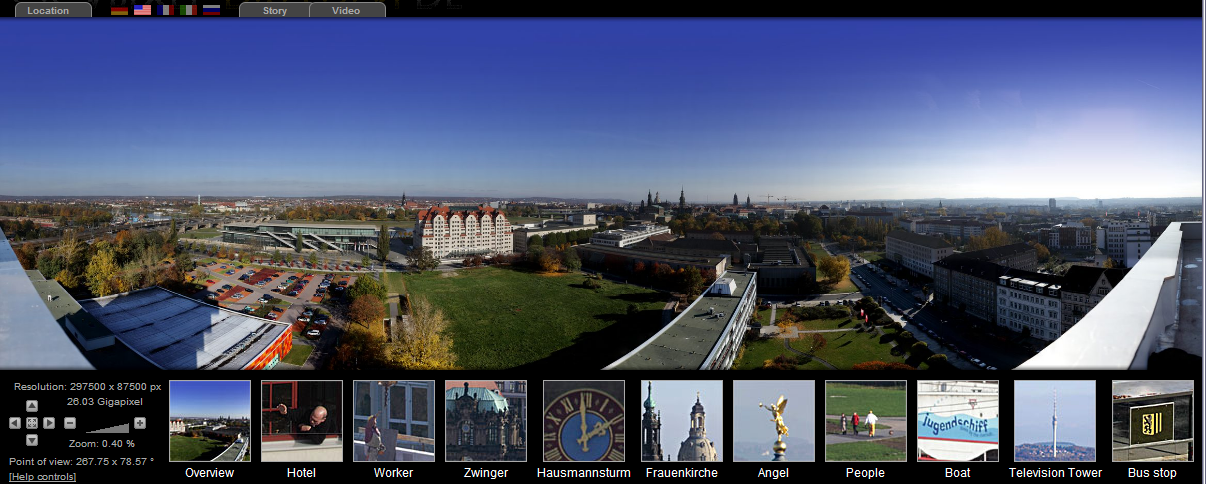
We have seen many, but today’s world record is a 26-gigapixel panoramic image of Dresden, Germany. I did not write 26-megapixel. It’s 1000 times what you’d expect from a better-than-high-end digital SLR photo camera.
This impressive photo is made of 1,665 individual shots captured with a Canon EOS 5D Mark II photo camera armed with a 400mm tele-lens, and combined together on a powerful computer.
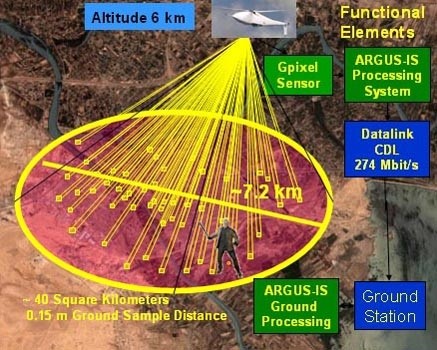
The guys at DARPA have developed a neat camera for ground surveillance of the battlefield: The ARGUS-IS (Autonomous Realtime Ground Ubiquitous Surveillance – Imaging System). This is a digital camera that can be strapped under a helicopter at a 15,000 feet altitude and provides an amazing view. Actually, not all the data (1.8 giga-pixels by 15 frames/s) is streamed down to HQ, but up to 65 independent video windows are tracked simultaneously.
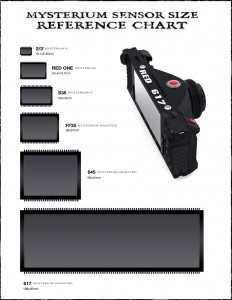
It’s been quite some time already that a company named Red prepares not only a photo camera but a full photo & video system with a very high level of configurability. I recently stumbled upon the description of the various sensors that intend to included in their cameras.
See the size of the larger sensor: The RED 617 Mysterium Monstro sensor has 261,352,000 pixels (about the same number as sensitive cells at the back of a human eye).
The images to come out of it will certainly be monstrous as suggested by the sensor name.
I consider that the most useful and often the most interesting wallpapers for your computer desktop are images that are relatively feature-less. A picture full of little details continuously grabbing your attention is a major nuisance. It’s much better to have either a very smooth image or a photo containing a lot of continuous tones.
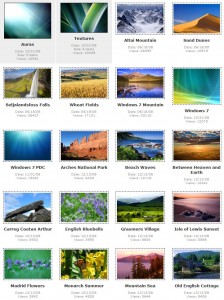
Windows 7 official wallpapers
Look at the full set of the Windows 7 wallpapers. This is the upcoming version of Windows (after Windows Vista, it seems that Microsoft intends to switch back to a numbering scheme). Most of them may be colourful, but with very smooth surfaces where your icons will be appearing quite neatly and they offer a nice contrast.
Fresh Impact Crater Formed between February 2005 and July 2005 Credit: NASA/JPL/University of Arizona
So, I was quite interested when I stumbled upon the collection of pictures taken by the HiRise (High Resolution Imaging Science Experiment camera installed on board the Mars Reconnaissance Orbiter). Shooting photos of Mars surface, this photo camera brings extraordinary color images that provide nice patterns to be used as background for your Windows desktop (or even Linux or Mac desktop) and can be renewed quite regularly: Their catalog is available on the University of Arizona web site.
Furthermore, they provide an enormous resolution for their images which is a very good way to extract any size you may need for your extra-high-resolution background or to cover your 2- or 3-LCD display. Or even more. If you feel that there own selection of wallpapers is not enough:
800×600
1024×768
1152×864
1280×960
1440×1080
1600×1200
1920×1440
2048×1536
2560×1600
You can still stick to the original size (JPEG-2000 format images range between 0.5GB and 3GB).
And the good news is that there is no copyright restrictions, so you could do pretty much what you want with them: Really free desktop wallpapers.
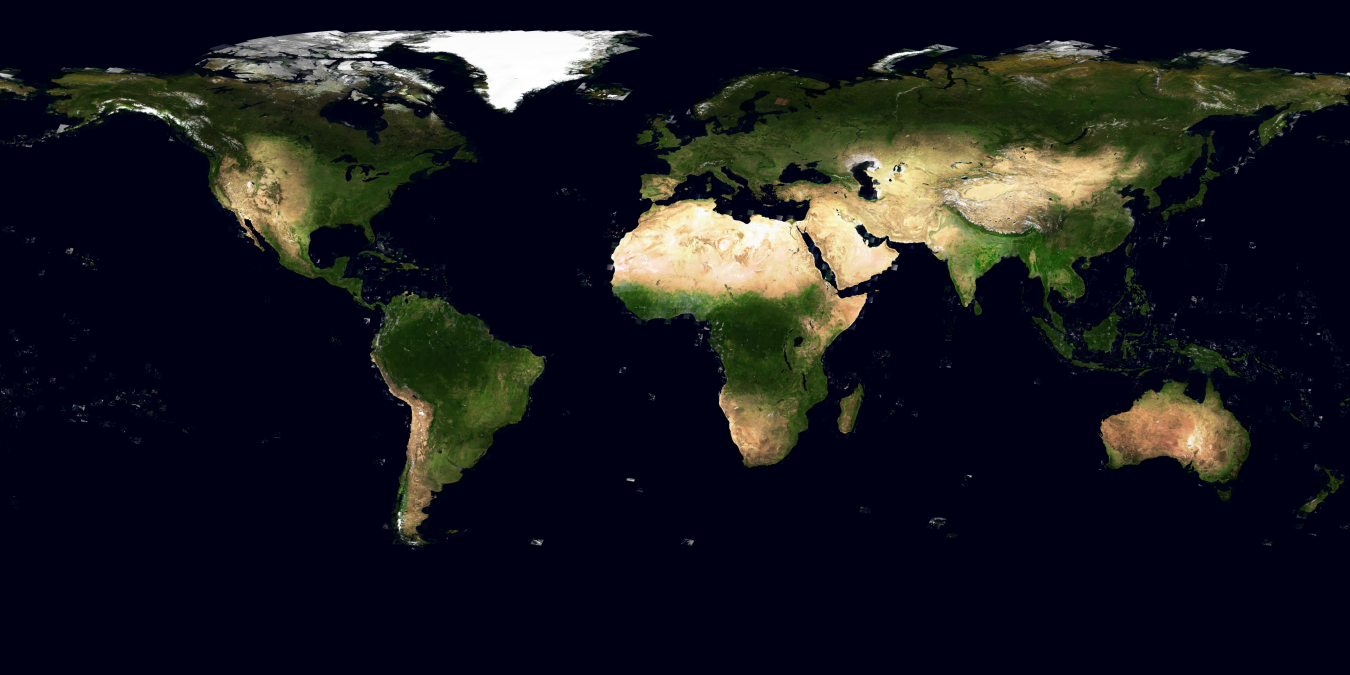
True Marbleâ„¢ is a true color, photo-realistic, high resolution, 3 terabyte image of the earth. All data is provided at a base 15 meter resolution. Even if this was not shot in a single time (sattelite imagery is a bit more complex than Gigapan panoramas), this is really stupendous. But even more, you can download your own reduced subset for free. Keep cool, this is a lot of downloads of big files (they are even available on BitTorrent – much more practical than FTP downloads, and faster too). But it’s definitely there.
After showing here several record images in terms of resolution, here is a picture (with its own incredibly large quantity of pixels) of a record length: 100 meters. Here, panorama takes it to such extremes…
It was taken over the course of 20 days and includes 178 different people.
Here comes a photo camera with 1400 mega-pixels. This is the camera installed in Hawai in the Panoramic Survey Telescope and Rapid Response System (PanSTARRS) telescope.
Pan-STARRS
I say that when Kirkland AFB builds a photo camera, Canon, Nikon, Sony and the others should bow and admire.
What is clearly one of the largest digital photos ever taken is presented by Gerard Maynard. 17-giga-pixel image where you can zoom in to look at interesting details.
Several times, I talked about the limitation to photo image quality by light diffraction but I failed to go into the details. To the general request of one reader who asked, I will try to give some explanations to better understand why the digital photographer must absolutely take that into account to make better pictures and to choose its camera.
The first thing to know is that light diffraction is a very general phenomenon and quite natural. It’s been a long time already that scientists and engineers noticed that -on the one hand- light rays are slightly deflected while running through a very small orifice and -on the other hand- two light rays can interact with each other on the condition that they are have very paths nearly perfectly parallel. This is even one of the most significant and founding elements of quantum physics. When you combine both those phenomenons, you will notice that light going through a very small opening like camera lens diaphragm will produce not exactly the expected neat circle but a more irregular and circular shape that you can see in the illustrative figure that goes along this paragraph: Usually named an Airy disk or Airy disc.
Greg Scott is really an impressive wild life photographer. His images of hummingbirds are simply astounding: clear, detailed, nicely framed and showing the bird in the most surprising positions.
Italian firm HAL9000 has a neat technology to shoot very high definition images. They apply it to antique art masterworks like Leonardo’s major painting “The last supper” (of recent cinematographic fame): An incredible 16 gigapixel resolution to get down to the finest cracks in the paint.
Another previous work from HaltaDefinizione (with only 8.6 billion pixels).
Photographers are avid of more pixels per frame. Most of them are also fond of panoramic photos (they look so cool). Why not join forces and make a contraption able to shoot panoramas with billions of pixels (multi-giga-pixel panoramas)?
This is what Charmed Labs and Carnegie Mellon University did when they developed the GigaPan robotic camera mount (Press release). Rather than stitching together hundreds of images painstakingly taken one-by-one, the tripod mount is able to pan through a landscape and capture the individual images needed by a computer program to build these wondrous images.
Not all the images are perfect, but some of them are gorgeous.
GigaPan motorised mount on a tripod. It hold nearly any kind of digital SLR camera and pans slowly to capture a full panoramic image.
The GigaPan is not currently available yet but could be no more than a few hundreds of dolalrs, and work with open source software (so, free software).
The Panoramic Survey Telescope and Rapid Response System (Pan-STARRS) is a project that is being prepared to hunt for dangerous asteroids that may hit Earth (and possibly wipe out Humans like one did for the Dinosaurs).
Technically, the sensor is impressive. It’s no less than 40cm-wide and hosts 1.4billion pixels (can you say “1.4 giga-pixel camera”?) but there will be four of them installed in Hawai.
Thanks to USGS and NASA, we will have one of the most detailed photo of the Antartica continent. Using images from the Landsat 7 satellite, the researchers created the most detailed, high-resolution map of Antarctica. This results in what is now known as the Landsat Image Mosaic of Antarctica (LIMA).
Using several images of the same location, they have been able to remove clouds from most of the map, but also, they gave a very clear view in near real-life colours (a difficult aim for most of satellite imagery): Natural colour at 30m resolution (or black and white at 15m resolution).
All in all, this is supposed to help scientists observe this region of the world that is critical for the understanding of global warming and its future effects on human life on Earth.
Are you looking for information and news about digital
photogaphy and digital SLR cameras?
They are now grouped again in my new web site YLovePhoto.com.